What housekeeping actually covers in a Dubai building
Housekeeping is not cleaning with a nicer name. Here is what the role actually covers in a Dubai hotel or tower, and where buildings usually under-staff it.
Gorkha Hospitality Services
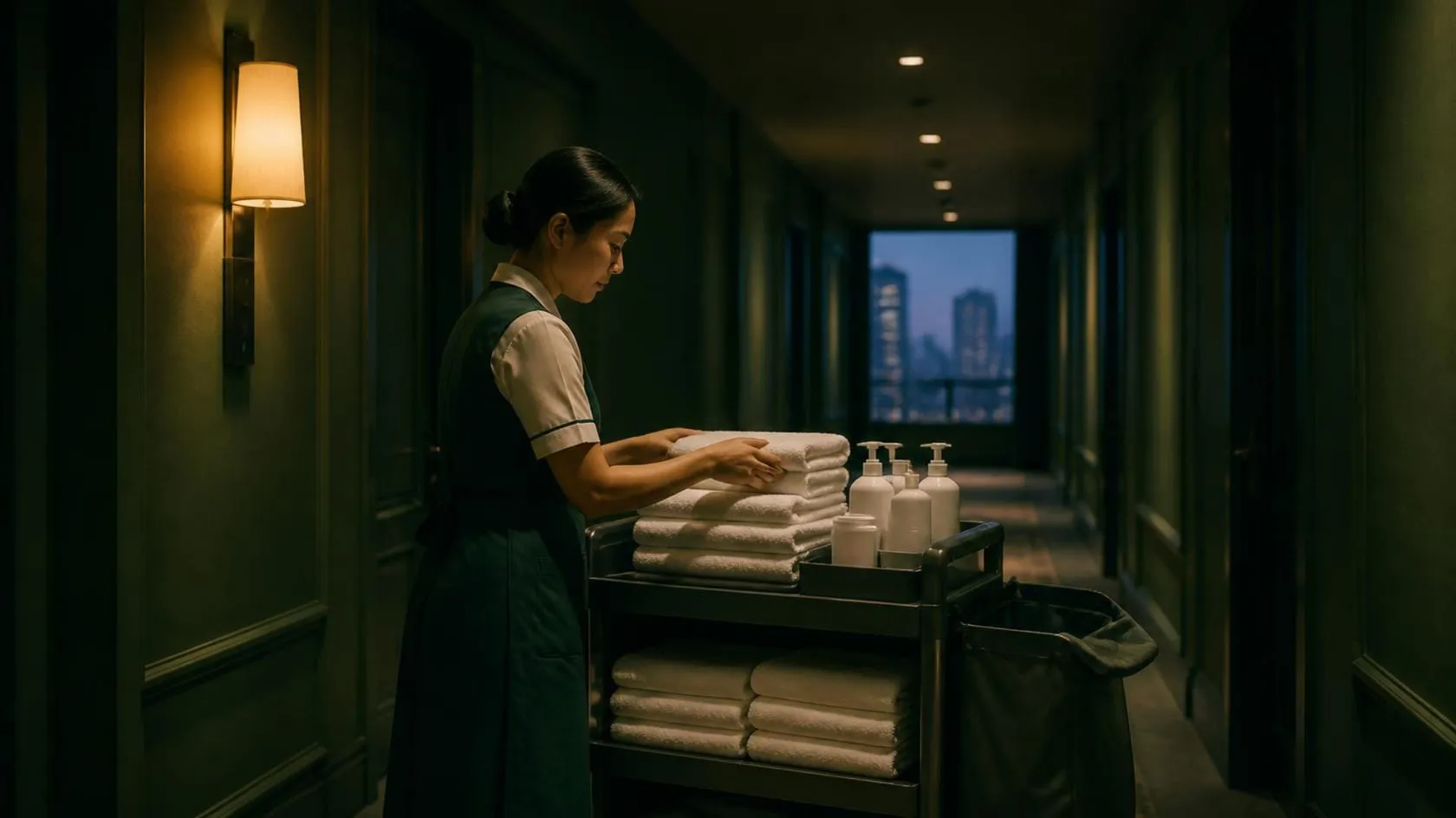
Ask five building managers what housekeeping covers and you will get five answers, most of them shorter than the truth. It is the department a guest notices only when it fails, which makes it the easiest one to under-staff and the most expensive one to under-staff.
Here is what the role actually involves in a Dubai hotel, serviced apartment block or commercial tower — and where the gaps usually open.
The part everyone knows
Guest rooms and units. Beds stripped and made, bathrooms cleaned and restocked, floors vacuumed, surfaces dusted, bins emptied, amenities replaced. In a hotel this runs on a room-status system: vacant dirty, occupied, vacant clean, inspected. An attendant works a credit list, and the honest planning number in the UAE is 14 to 18 rooms per attendant per shift for a mid-market property. Push it past twenty and the shortcuts start; they are invisible for about a fortnight and then they are in the reviews.
The part that gets forgotten
Everything outside the door. Corridors, lift lobbies, staircases, fire escapes, back-of-house passages, the loading bay, the smoking terrace nobody claims. Public-area cleaning is a separate workload from room servicing, and buildings that fold it into the room attendants’ round get neither done properly.
Public washrooms deserve naming separately. In an office tower or a mall they are where the building’s reputation is actually decided, and they need a checked rota — a signed sheet, an hourly walk, a named person — not “whoever is passing”.
Linen and stock control
Housekeeping owns the linen cupboard, and linen is where the money quietly leaks. Par stock — how many sets of each item exist per room — has to be counted in and counted out, with damaged and stained pieces pulled rather than recirculated. A property running below three par is one delayed laundry collection away from a floor with no towels at eleven in the morning.
The same applies to amenities and chemicals. Somebody has to notice that the floor is on its last case of glass cleaner before it runs out, and that somebody is a housekeeping supervisor.
Inspection
An attendant cleans; a supervisor checks. A property with no inspection layer is not running housekeeping, it is hoping. The standard is a spot-check on a percentage of rooms each shift, every room after a deep clean, and every room before a VIP arrival. It costs one supervisor per eight to twelve attendants and it is the difference between a standard and an aspiration.
Deep cleaning, which is not housekeeping
Periodic deep cleans — mattress and upholstery extraction, curtain cleaning, grout, high-level dusting, air-vent grilles — are a scheduled project, not something a room attendant fits in around a credit list. They are planned quarterly or half-yearly, usually floor by floor so rooms stay sellable, and they are the single most reliable way to stop a property ageing faster than its refurbishment cycle.
Where Dubai adds its own problems
Three things are specific to operating here.
Dust. Construction and desert dust arrive continuously, and they arrive on every horizontal surface including ones nobody schedules — skirting, ledges, the tops of door frames, AC grilles. A cleaning specification written for a temperate climate under-counts this by a wide margin.
Occupancy swing. A property that is 55% full in August and 95% full in February cannot staff for the average without being visibly short in season, and cannot staff for the peak without paying for empty months. This is the whole argument for a flexible outsourced layer on top of a permanent core.
Employment overhead. Visas, medicals, Emirates ID, accommodation, gratuity accrual and a WPS payroll run — for a role with genuinely high turnover. Every resignation restarts that process while the floor still has to be serviced.
What good looks like
If you want one test: ask who covers a sick call at 6am on a Friday. A building where the answer is “we manage” is a building where the floor gets serviced late and nobody writes it down. A building where the answer names a person and a process is one where housekeeping is actually being run.
That is the practical case for outsourcing the flexible layer. Absence, replacement and holiday cover become the supplier’s problem to solve, and what you buy is coverage rather than a hiring project.
Gorkha Hospitality Services places trained housekeeping attendants and supervisors across Dubai — daily cover, holiday relief or a full permanent team. Request a quote or call the 24/7 line.